
Playback Theatre for Teachers: Riga Course | BPTPS
Playback Theatre for teachers is not a lecture, it is practice. At the BPTPS introductory course in Riga, 32 educators learned to listen to teenagers and to each other through improvisation.
On Wednesday, 21 October, the hall of Rīgas Natālijas Draudziņas vidusskola turned into a theatre studio for a whole day. From 11:00 to 17:00, Riga educators took part in an introductory course in Playback Theatre. It was held together with the Riga Interest Education Methodological Centre and led by Beata Bērziņa, a Playback practitioner and theatre director.
The course took place thanks to the support of our sponsors, so participation was free for teachers. We want this method to reach the people who work with children and teenagers every day.
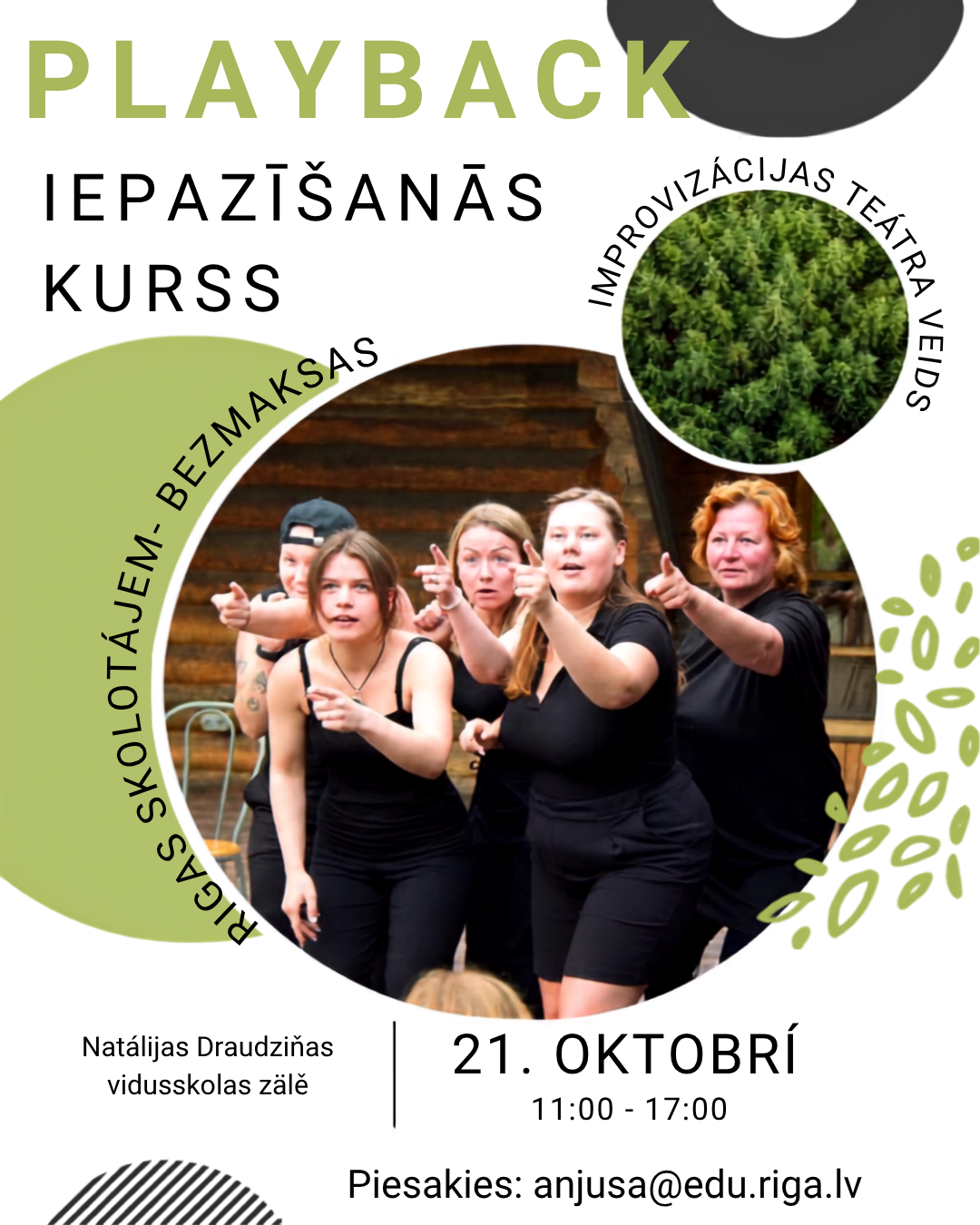
The Course at a Glance
- Format: a one-day introductory course in Playback Theatre for educators, with practice instead of lectures
- When: Wednesday, 21 October 2026, 11:00–17:00
- Where: Rīgas Natālijas Draudziņas vidusskola, Bruņinieku iela 24A, Riga
- Facilitator: Beata Bērziņa, Playback practitioner and theatre director
- Who took part: 32 people: interest education teachers, school theatre teachers, social pedagogues and class teachers
- Participation: free for teachers thanks to sponsor support
- Partner: Riga Interest Education Methodological Centre
- What is next: introductory courses for Riga teachers once a month throughout the school year
A Full Hall, Many Professions
The hall was full: 32 interest education teachers, school theatre teachers, social pedagogues and class teachers. Their professions differed, but their question was the same: how to hear teenagers better and build real contact with them.
Playback Theatre for Teachers: What It Is and Why It Matters
Playback is a form of improvisational theatre. It is built on real stories told by the audience, which the actors play back on the spot. In school, Playback becomes a method where every voice is heard. It helps a teacher build the group, relationships and the emotional culture of the class.
For an educator, the method offers three main benefits:
- It unites a class into a group. It gives a voice to the quiet ones, eases tension between students and makes visible what usually stays out of sight during a lesson.
- It develops emotional skills. By playing out stories, children notice their own feelings and those of others, learn to name their experiences and truly listen to one another.
- It fits into lessons and pastoral work. The method works in literature, history and social studies, as well as in form-time and character-building activities.
Watch First, Then Try
The first Playback performance came from the members of Beata’s theatre group. They listened to stories from the adults in the hall and played them out on stage straight away. Afterwards they answered the teachers’ questions and explained why they had chosen each form. For Beata it was a proud moment: she writes that she is very glad and proud of “her” young people.
When the educators took the stage themselves, the ease they had seen from the audience vanished. After a warm-up and attention exercises, the group tried the short forms Transformation, Palette and Fluid Sculpture. Then they moved on to the long form Echo, which proved the hardest.
“It turned out we can’t even count to three, let alone play together!” admitted one participant.
There is a serious observation behind the joke. In Playback you cannot perform alone: you have to watch your partner, catch their impulse and respond in time. Many teachers noticed how focused on themselves they are in the rush of everyday life.
What Participants Took Away
Participants’ feedback was warm. They praised the creative atmosphere and the well-thought-out content, and said the time flew by. Some were already planning where to use the new techniques.
“We definitely want to come back to Beata for more Playback!” wrote one of the teachers.
Their main wish was a two-day format to explore the method in more depth. We have heard it.
What the Organisers Say
Beata Bērziņa has been teaching Playback for many years and works mostly with teenagers. What she liked most was that people received the method “simply and easily”. She called the participants a “fantastic company”, and in her post she thanked everyone for the mood and the organisation.
Antra Ņjuša, chief specialist of the Riga Interest Education Methodological Centre, said the course “hit the bullseye”. She wrote about it in more detail in her article on intereses.lv.
What Comes Next
We will run introductory courses for Riga teachers once a month throughout the school year. Follow the announcements in our Events section, and read about the school’s programmes on the Courses & Trainings page. For questions about the method and the school, write to info@bptps.lv.
Thank you to the Riga Interest Education Methodological Centre, to Beata Bērziņa, to all participants, and to the team of Rīgas Natālijas Draudziņas vidusskola, who welcomed us in their hall.
Frequently Asked Questions
What is Playback Theatre?
It is a form of improvisational theatre in which actors play back real stories told by audience members on the spot. In schools, the method helps build the group, relationships and the emotional culture of the class.
Who took part in the introductory course in Riga on 21 October?
32 people: interest education teachers, school theatre teachers, social pedagogues and class teachers.
Was the course paid?
No. Participation was free for Riga teachers thanks to the support of BPTPS sponsors.
Which Playback forms did participants learn?
The short forms Transformation, Palette and Fluid Sculpture, and the long form Echo.
Will there be more introductory courses for teachers?
Yes. We plan to run them once a month throughout the school year. Announcements are published in the Events section at bptps.lv.
How can I contact the school?
Write to info@bptps.lv or call +371 29 176 209.